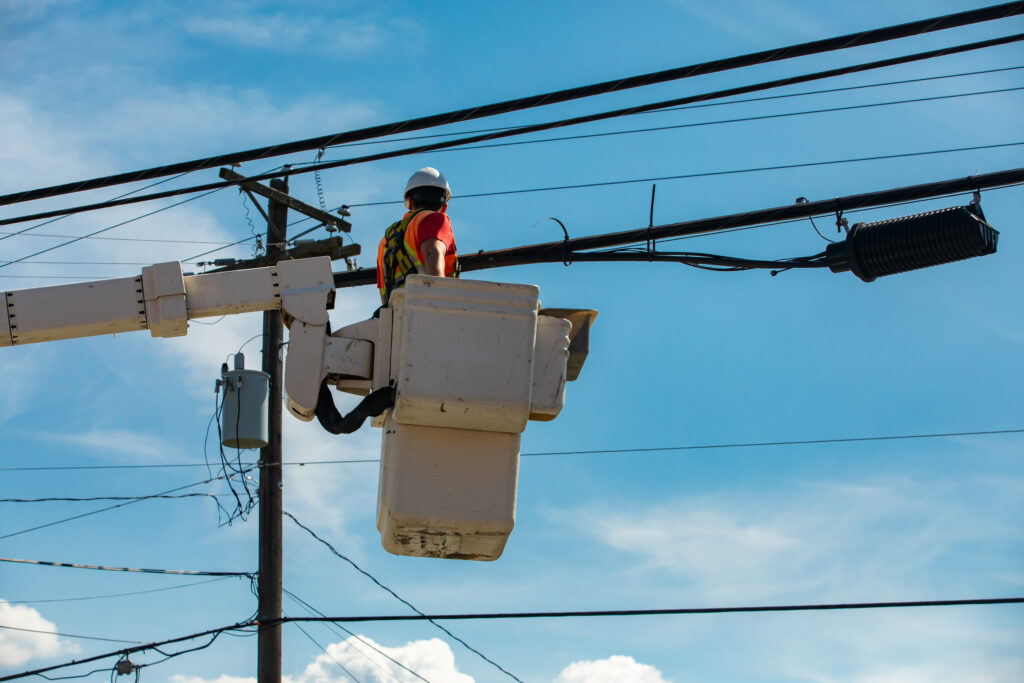
Elevating Work Platforms (EWPs) are a common sight on construction and electrical job sites. Whether it’s a scissor lift, boom lift or vertical platform, these machines provide quick access and a stable working position at height. While they improve efficiency, EWPs also carry significant risks if not used with the right safety measures in place. One of the most important of these is the presence of a trained safety observer.
A second set of eyes on the ground
Most EWPs are operated from controls at height and include emergency controls at ground level. However, operators often have limited visibility of their surroundings. This is where a safety observer becomes essential.
A safety observer remains on the ground and acts as a second set of eyes. Their responsibilities include:
-
Identifying hazards the operator may not see
-
Assisting with navigation in tight or low-visibility areas
-
Operating emergency descent controls if required
-
Raising the alarm and initiating emergency procedures if something goes wrong
In environments with overhead obstacles, live wires, poor lighting or pedestrian movement, the safety observer plays a critical role in preventing incidents.
Legal obligations and safe work practices
Using EWPs is classified as high-risk construction work, which means a Safe Work Method Statement (SWMS) is required before the job begins. This document must clearly set out the steps of the task, the potential hazards, and how those risks will be controlled.
Under Victoria’s Occupational Health and Safety laws, employers must take all reasonably practicable steps to keep workers safe. Having a properly trained and dedicated safety observer on site is part of meeting that duty.
What qualifies someone to be a safety observer?
Not everyone on site is suitable for this role. Observers must:
-
Be trained and competent in the use of the EWP being used
-
Hold a high-risk work licence if required for that type of equipment
-
Be trained in emergency rescue procedures
-
Be registered as an ESV Electrical Spotter when working near live overhead lines
In some cases, employees of power distribution companies may be exempt from the spotter requirement due to their specialist training.
Observers must remain focused at all times. Even if the platform is stationary, the observer cannot carry out other work or leave the EWP unattended.
How many observers are required?
There is no fixed number. The key is ensuring:
-
All EWPs remain within the observer’s clear line of sight
-
Each EWP type is matched with someone appropriately trained
-
There are enough personnel to assist with rescue if necessary
A moment of inattention can compromise the safety of the entire operation. Observers must be alert and ready to act.
Resources
-
Download the EWP Industry Standard for guidance on safe use.
-
Watch this video for an overview of EWP hazards and how to manage them.